







Venezuela Marks 20 Years of Communal Councils with Mass Mobilization
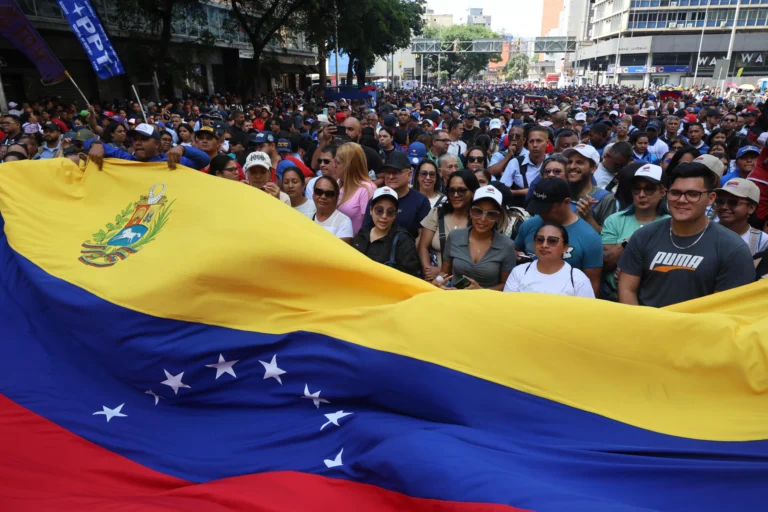
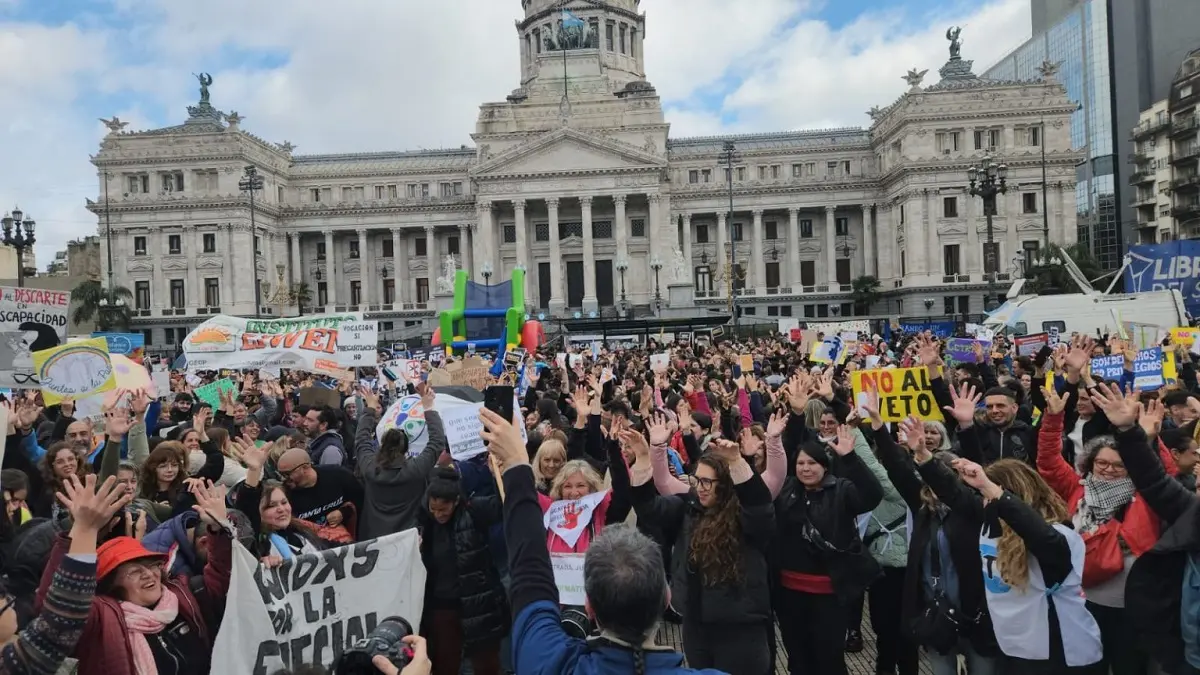
Thousands of Venezuelans concentrated in the center of Caracas to ratify the validity of the Communal Councils as the basis of the political and social system of the country. Photo: EFE.
April 9, 2026 Hour: 11:33 am
🔗 Comparte este artículo
Thousands of Venezuelans mobilized in Caracas today to celebrate the 20th anniversary of the Organic Law of Communal Councils, commemorating its promulgation by Commander Hugo Chávez and reaffirming popular sovereignty.
The Venezuelan people held a massive mobilization through the streets of Caracas on April 9, to commemorate the 20th anniversary of the Organic Law of Communal Councils. This significant march celebrates the sanctioning of this legal instrument by the National Assembly and its subsequent promulgation by Commander Hugo Chávez on April 9, 2006.
The Communal Councils have since become a fundamental pillar of the country’s social and political system, promoting direct citizen participation in local decision-making and project implementation.
Workers, students, and various social movements traversed the capital’s main avenues, with their final destination being the Miraflores Palace, the official seat of the national Government. This collective demonstration not only commemorated a landmark legislative achievement but also served to reaffirm the enduring validity and importance of the Communal Councils as the bedrock of Venezuela’s participatory and protagonist democracy.
The march emboded the spirit of popular sovereignty, showcasing the organized power of the people in upholding their constitutional rights and responsibilities.
Text reads: “Caracas celebrated the 20th anniversary of the Communal Councils with a great popular mobilization. With a massive mobilization that toured the streets of the capital and culminated in the vicinity of the Miraflores Palace, the organized people commemorated the 20th anniversary of the Law of Communal Councils, a tool that marked a milestone in the construction of participatory and pro-democracy in Venezuela…”
…”As Commander Hugo Chávez said: “The Communal Councils are the fundamental and vanguard tool for advancing in the construction of socialism, because they represent the fundamental cell of revolutionary and true democracy.” Two decades later, that seed continues to grow in every community, in every assembly and in every project built by the people.”
Diosdado Cabello, Vice President of the United Socialist Party of Venezuela (PSUV, in Spanish), spearheaded this significant mobilization in the capital of the country. From his speech on Avenida Urdaneta, Cabello championed the model of direct democracy originally promoted by Commander Hugo Chávez in 2006. He highlighted the substantial progress achieved, noting that Venezuela currently boasts 5,336 active communes and aims to expand this number to 6,000 in the short term. This growth underscores the profound impact of the law in fostering grassroots participation and local governance across the nation, demonstrating a unique approach to development rooted in popular empowerment.
Diosdado Cabello recalled that, following the initial approval of this seminal law, opposition sectors resorted to the Supreme Court of Justice in an attempt to annul it. These efforts were described as seeking to “take revenge on the people” for their self-organization and autonomy. He sharply contrasted the historical resilience and unwavering determination of the grassroots movements with the stances of those who currently advocate for international sanctions and blockades against Venezuela.
Cabello firmly asserted that the Bolivarian Revolution remains the sole guarantor of peace and stability in the face of ongoing external destabilization attempts, resisting foreign interference and defending national sovereignty, emphasizing the crucial role of internal unity against external pressures.
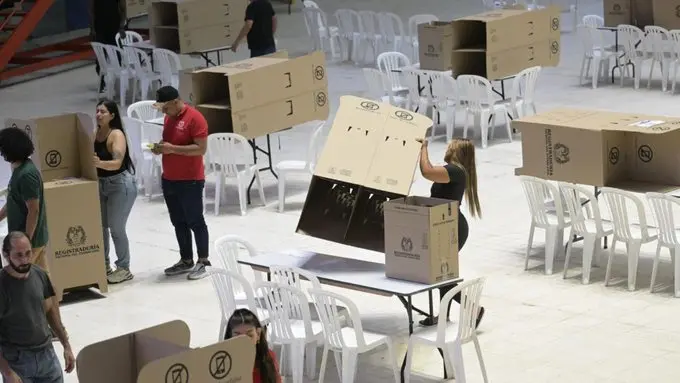
Cabello also referenced the recent popular consultation held on March 8, describing it as achieving the highest voter turnout recorded for this type of participatory exercise. He underlined that, under the instruction of “commune or nothing” issued by President Nicolás Maduro, there has been a significant deepening in the direct delivery of resources to communities. This initiative empowers these communities to independently determine their own priorities for development and territorial security, ensuring that local needs are met through direct democratic processes, solidifying the role of communal councils as vital mechanisms for local self-governance and resource allocation.
In 2006, during the “Aló Presidente” program, Hugo Chávez famously defined the Communal Councils as the “fundamental cell of revolutionary democracy” and the vanguard tool for building socialism. This structure of self-governance enables communities to define their own development projects through annual Popular Consultations. These consultations ensure that community needs and aspirations are directly reflected in local planning and resource allocation.
Today’s march not only celebrated the ongoing validity of the law but also ratifies the commitment of grassroots organizations to peace, work, and the strengthening of popular sovereignty in the face of current challenges. The Communal Councils Law was reaffirmed and updated for the last time in November 2009, consolidating its pivotal role in Venezuelan popular participation.
Author: Laura V. Mor